Kit It & Win It: Turning Fabric Collections into Custom Bestsellers
There’s real power in offering a kit your customer can only get from you.
A thoughtfully curated custom kit removes decision fatigue, highlights fabrics of your choice, and gives customers a clear “yes.” When the fabric and pattern are already paired, the project feels doable — and that confidence drives sales.
Start With a Cohesive Collection
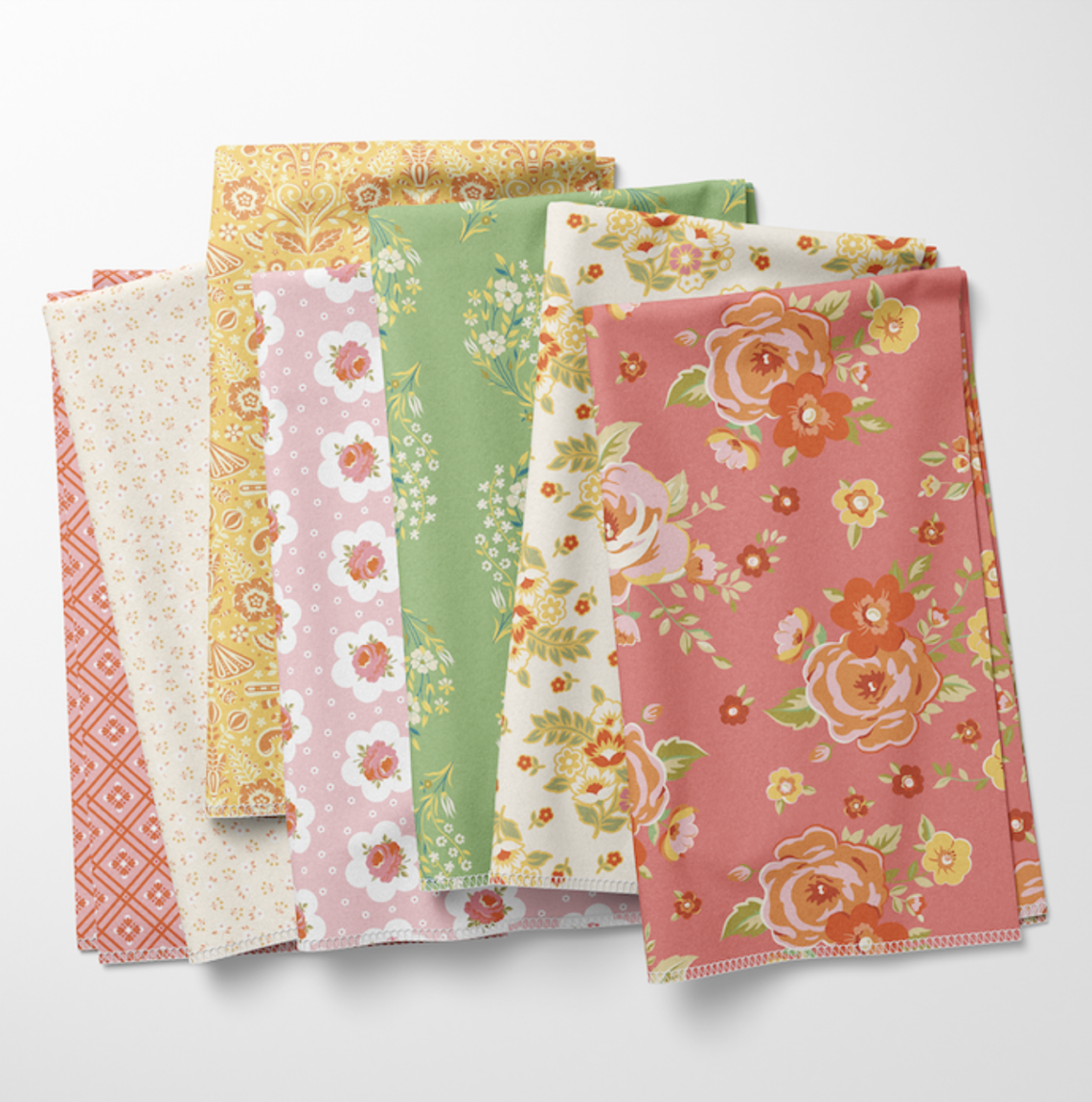
Your kit can begin with an entire designer collection or even a curated mix of your “need-to-go” fabrics that still tell a strong color story. The key isn’t where the fabric comes from — it’s that the final bundle feels intentional and visually unified.
A strong grouping does the heavy lifting for you. Scale, color balance, and contrast should already feel built in — your job is simply to spotlight them.
When selecting fabric, look for:
- A hero print that anchors the design
- Variety in scale
- Strong contrast for backgrounds or sashing
- A color story that feels complete
Choose fabrics your customers are already reaching for. Build momentum around what’s working in your shop — or use this as a strategic way to move pieces that just need a clearer story.
Pair It With a Pattern That Showcases the Fabric
The right pattern should highlight the prints — not compete with them.
Look for designs that:
- Feature focal prints
- Create movement or visual interest
- Feel impressive but approachable
And don’t overlook the free pattern library from Riley Blake Designs. Professionally designed quilt patterns available at no cost mean lower production expenses and stronger margins for your shop. It’s one of the easiest ways to turn a collection into an exclusive in-house offering.
Build More Than a Kit — Build an Experience
Include:
- Fabric for the quilt top
- Binding
- Printed pattern
- A clear mockup or sample image
Then go one step further. Don’t forget coordinating notions. If the pattern calls for specialty rulers, templates, unique thread, or interfacing, bundle them in — or at the very least, merchandise them right beside the kit. You’ll increase average sale and eliminate last-minute customer hesitation.
Better yet? Pair the kit with a coordinating class. A scheduled class:
- Increases kit sell-through
- Creates built-in community
- Adds instructional revenue
- Encourages customers to start (and finish) the project
When a kit has both a sample on display and a class on the calendar, it becomes an event — not just a product.
Start This Month
If you’re ready to test custom kits in your shop, keep it simple:
- Choose one current collection that’s performing well.
- Select a free pattern that highlights its strengths.
- Cut and bundle 6–12 kits to start (create light urgency).
- Merchandise coordinating notions next to the display.
- Put a class on the calendar within 30 days.
You don’t need to overhaul your floor. One intentional kit can move an entire collection faster and increase your margin at the same time.
Custom kits give you control over pricing, presentation, and exclusivity. And in a competitive retail landscape, that kind of control is more valuable than ever.
Industry Insight
Cindy Anderson: Regional Account Executive at Riley Blake Designs and former Etsy shop owner
“One of the biggest lessons I learned running my Etsy shop was that customers don’t just want fabric — they want a finished vision. My curated kits consistently outsold individual yardage because the decision-making was already done for them.
When I paired a cohesive collection with a pattern that really highlighted the prints — and photographed it beautifully — it created instant confidence.
I also made sure to include any specialty notions in the listing or link them directly. The easier I made it to click ‘add to cart,’ the higher my conversion rate.”

You May Also Like
Stationery Projects with Berry Market
RBD Block Challenge – Block 12 by Amber Johnson