Embossed Stitches: How Texture and Digitizing Work Together
Machine embroidery offers so many beautiful ways to enhance a project. In most designs, fill stitches and satin stitches do an excellent job of translating artwork into thread. However, some machine embroidery projects call for a little something extra—and that’s where embossed and patterned fill stitches truly shine.
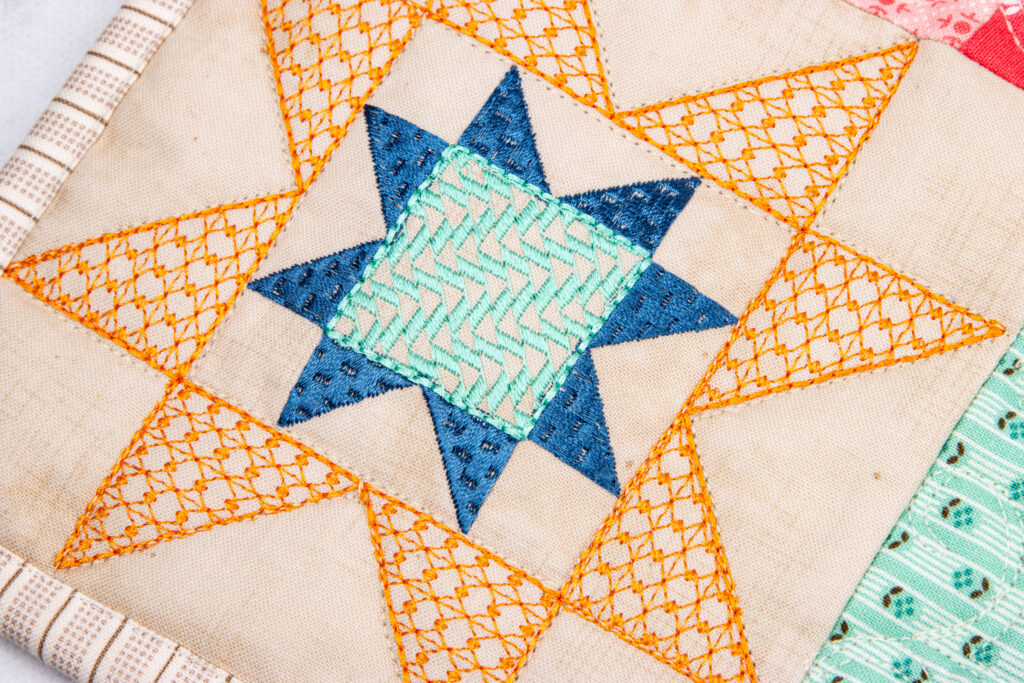
Patterned fill stitches differ from standard fill stitches in both appearance and structure. Regular fill stitches, often called tatami fills, lay flat and are designed to cover areas ranging from small to large. These stitches are typically short—about 3 to 3.5 mm in length—and are offset at regular intervals, all running in the same direction within the stitched area.
In some cases, the size of the area or the nature of the artwork calls for more visual interest. When that happens, a pattern is applied to the fill. Patterned fills adjust stitch placement by carefully aligning needle penetrations to create texture or a visible design. This can be as subtle as adding depth through stitch offsets or as decorative as forming a recognizable motif, such as scalloped stitching used to mimic roof shingles.
Satin stitches are used when a digitizer wants the stitching to flow with the shape of an object rather than running in a single direction. These stitches begin on one side of an area and travel smoothly to the other without interruption. The result is a sleek, slightly raised finish, which is why satin stitches are commonly used for lettering, such as the “S” shown below.
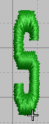
That smooth satin look does have limitations. A traditional satin stitch is generally restricted to a width of about 5–7 mm, depending on whether the machine embroidery machine is a home or commercial model. This limitation exists because the needle must periodically re-enter the fabric to secure the stitch with bobbin thread.
When a satin stitch area is enlarged beyond those limits, the needle penetrations become more visible. In a realistic preview, these show up as small dimples. While they may seem minor on screen, a digitizer knows that once stitched, these longer spans can create loose stitches. If even one stitch is pulled, the entire element—such as a letter—can begin to unravel.
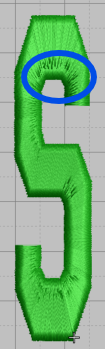
This is where patterned fill stitches really come into their own. They allow the needle to stop short of crossing the entire area while still maintaining the elegant appearance of a satin stitch. The result is improved stitch security without sacrificing visual impact.
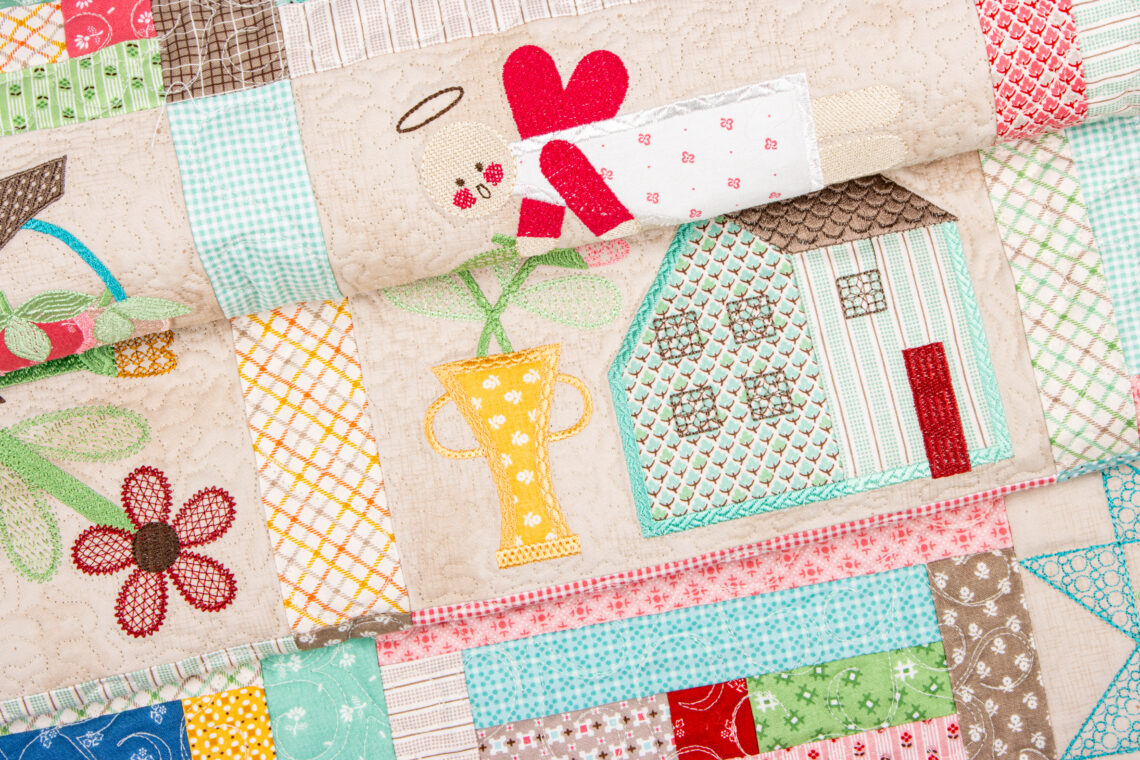
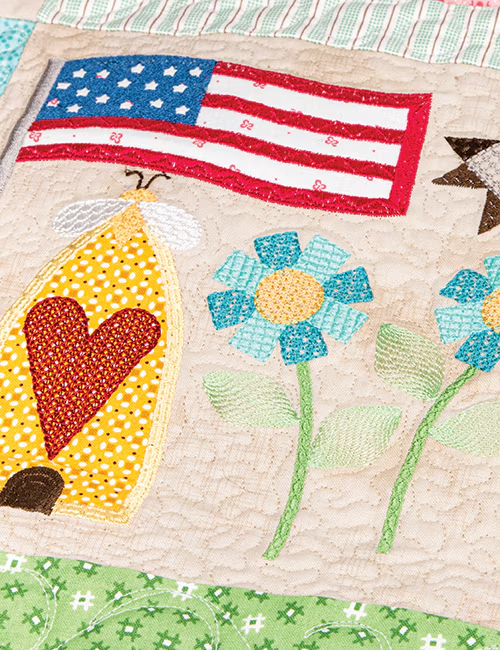
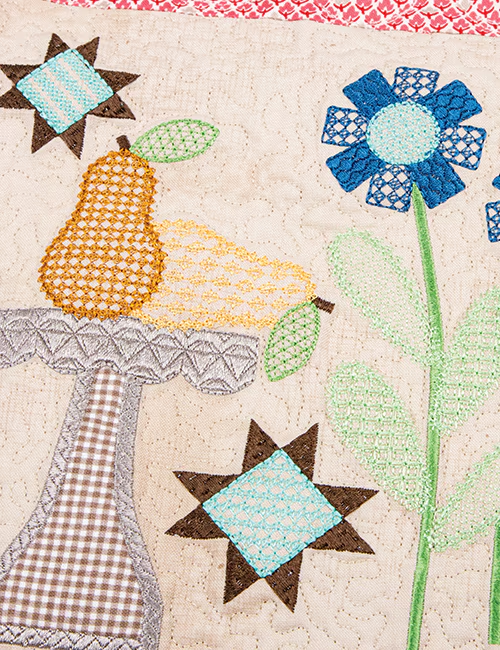
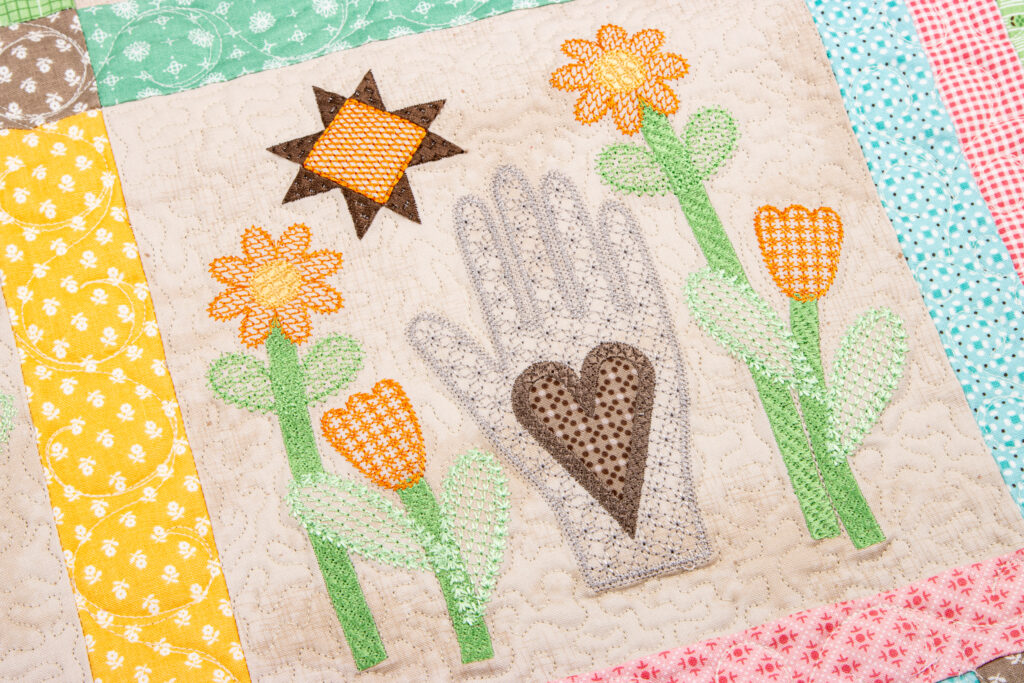
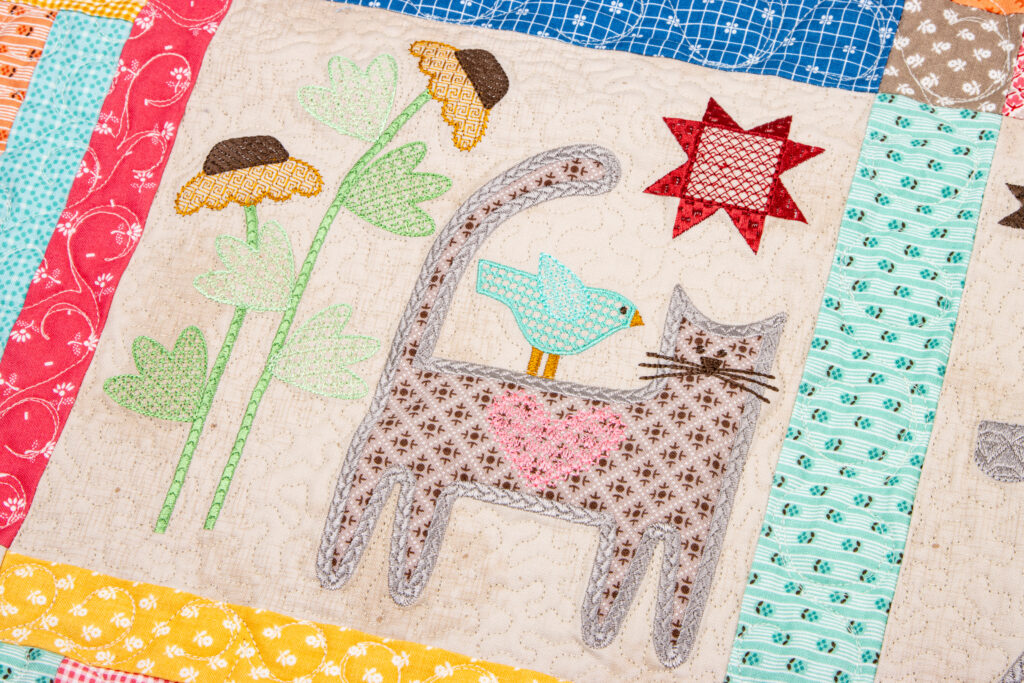
Lori Holt’s Prim Quilt, adapted for machine embroidery, is a wonderful example of how texture and patterned stitching can elevate a design. Thoughtful use of these techniques helps showcase the artistry of the original work while ensuring beautiful, reliable stitch results.


You May Also Like
Travel with Riley Blake Designs Flannel
Navigating the Stars featuring Tradewinds Batiks