Shibori – BoroBoro Shirt
Some garments are sewn.
Others are assembled from stories.
Shibori.
A traditional Japanese resist-dye technique whose name comes from verbs meaning to wring, squeeze, and press. Cloth shaped by the hand. Pattern coaxed into existence through tension and release. Indigo blooming where fingers once held tight.
Boro.
Not fashion at first, but necessity. A Japanese textile tradition born of thrift and care—old cloth repaired again and again with visible stitching, patching, and layering. Scraps transformed into something stronger, more beautiful, and deeply personal. A quiet philosophy: use what you have, honor what remains.
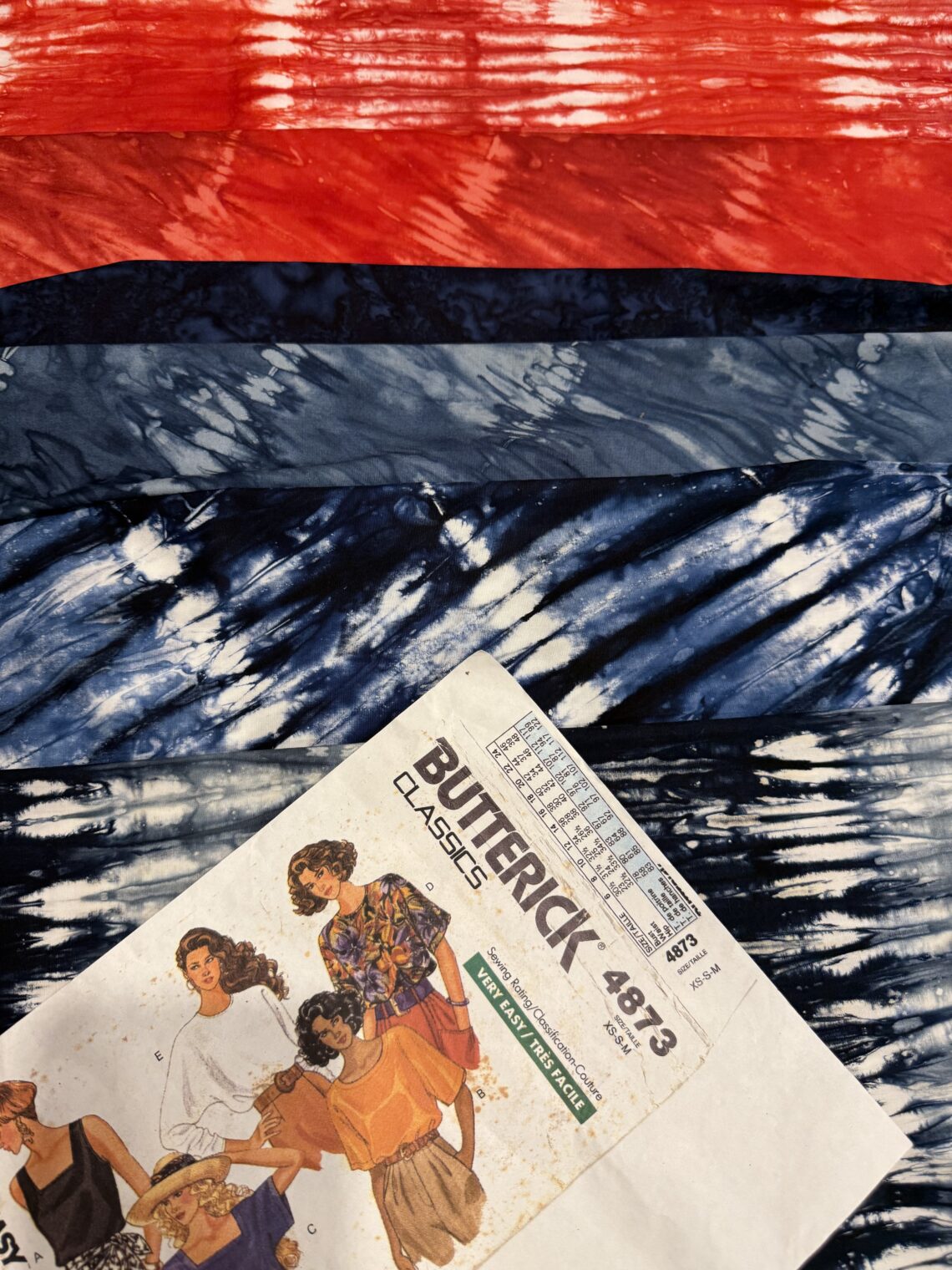
Granted, I began with five one-yard cuts of brand-new fabric from the Shibori batik line. But here on Kauai—where Japanese heritage runs as deep as the sugar plantations that once lined the coast—it only made sense that those fabrics would become a Boro Boro–style shirt.
Three years ago, I attended a community Boro Boro sewing event here on the island. That’s where I learned the basics—how to let imperfection guide the hand—and where I acquired the now-discontinued Butterick Pattern #4873, a simple, utilitarian shape that leaves room for the cloth to speak.
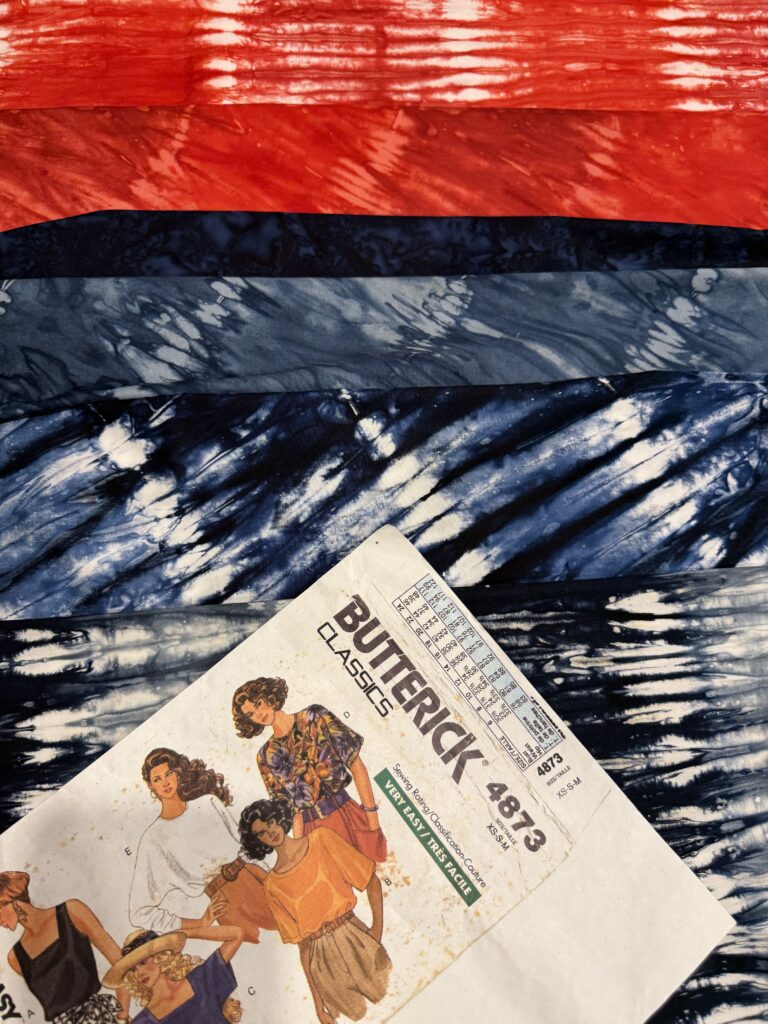
Boro begins not with cutting, but with building.
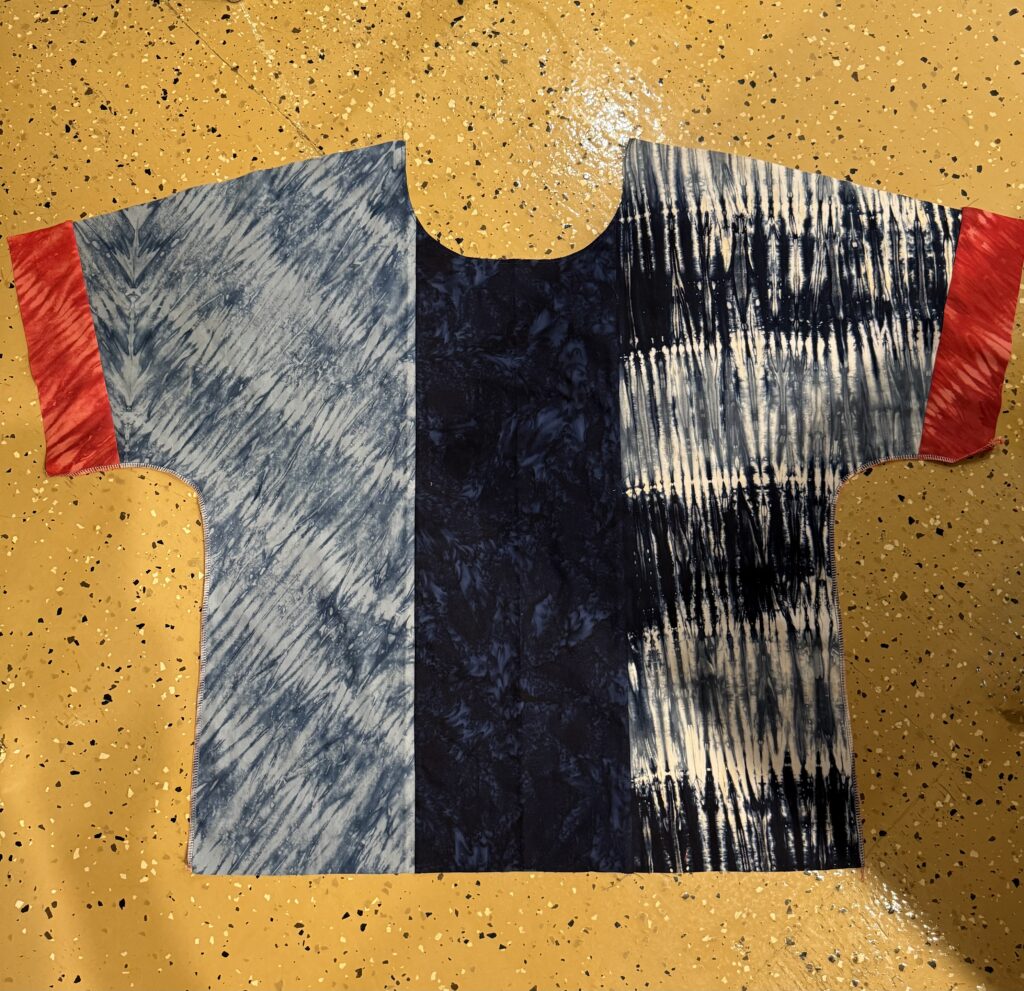
For the front of the shirt, I tore three pieces on the lengthwise grain—letting the fabric decide where it wanted to separate—and stitched them together into panels. The pattern itself is straightforward: a humble “T” shape, front and back alike. Honest. Unfussy. A canvas for texture and stitch.
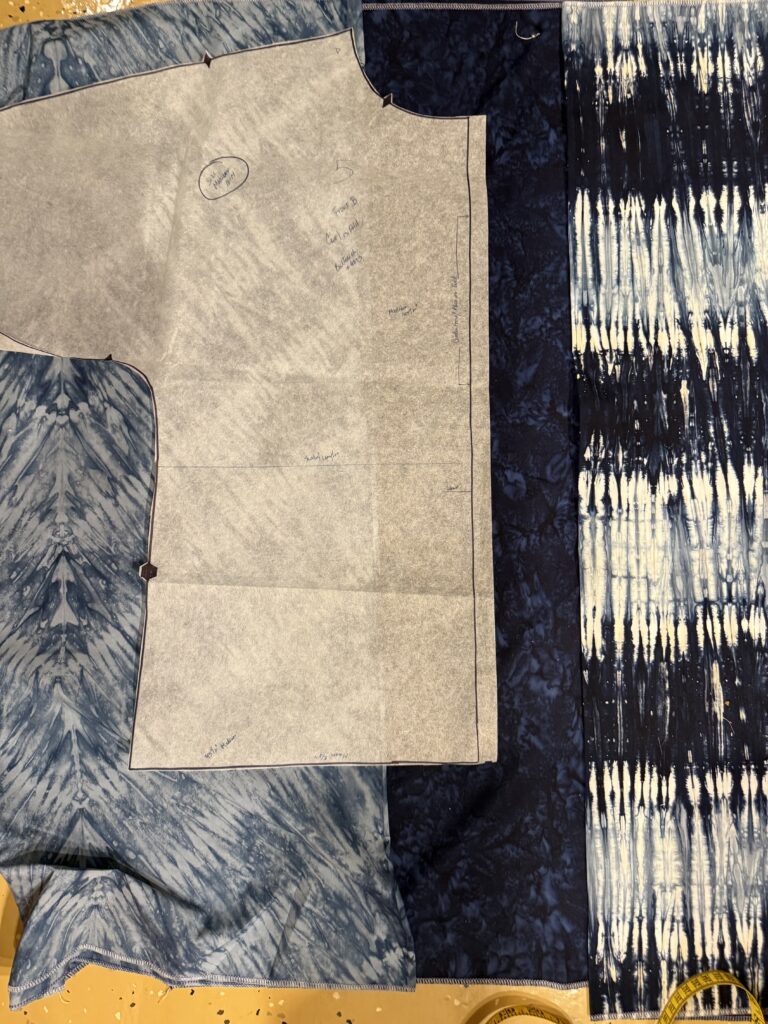
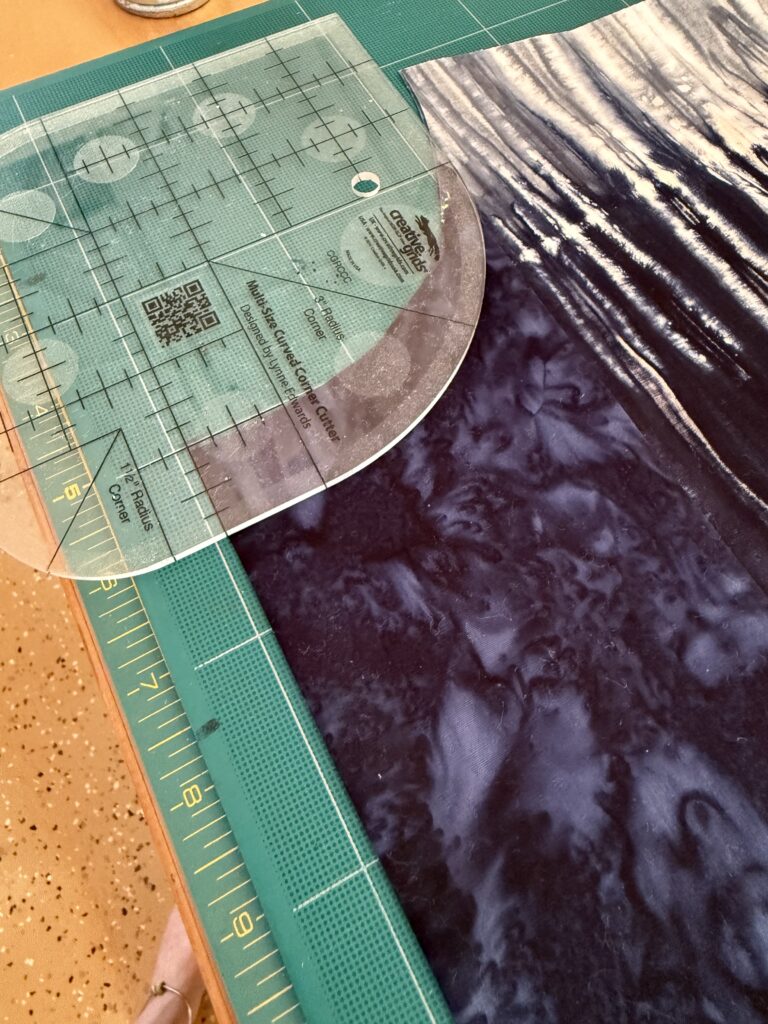
The same pattern serves for both front and back, though I prefer the front neckline slightly lower—an inch can make all the difference. A gentle curve, trimmed using my multi-size curved corner cutter, softens the line and invites the shirt to be worn, not admired from afar.
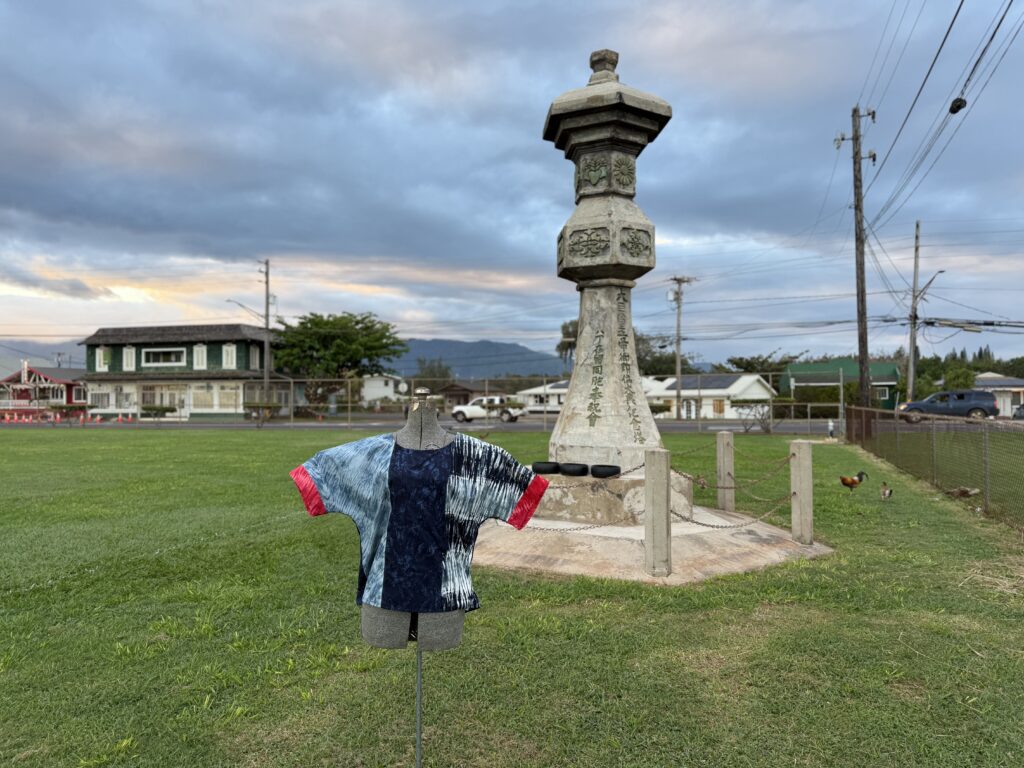
Blue and white, with a flash of red—this color story feels unmistakably Asian. To weave that influence through the garment, I trimmed the sleeves with red shibori, a subtle punctuation mark against the indigo field.
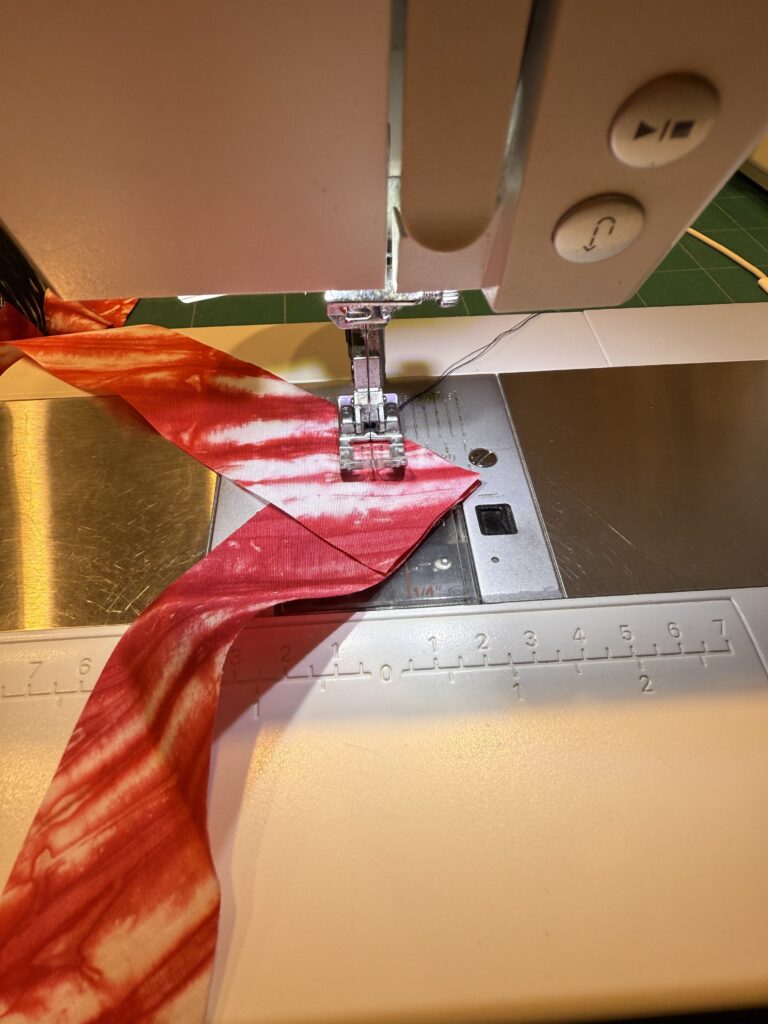
That same red-and-white shibori appears again, this time as bias trim along the inside neckline. A detail only the wearer may notice—but that’s often where the soul of a garment lives.
And the back? The back always deserves attention.
Inspired by the classic “Big Shirt,” I added a quiet detail there—something unexpected, something discovered only as you walk away.
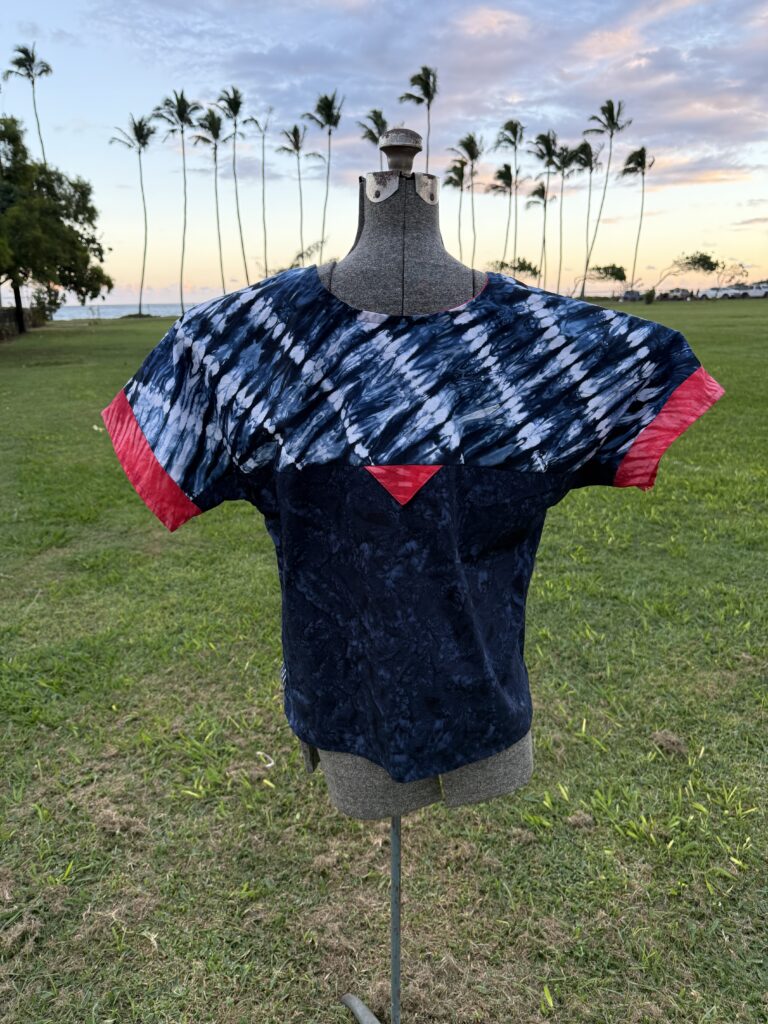
When it came time to photograph the finished piece, there was only one place it belonged.
On an island so rich in Japanese history, I traveled to the north end of Kapaʻa, where the Japanese Stone Lantern (Ishidōrō) stands. Fifteen feet tall, cast in concrete in 1915 by first-generation Japanese immigrants, it symbolizes light and enlightenment—values carried across the ocean and planted firmly into Kauai soil.
Cloth, culture, and place.
Woven together.
Repaired where needed.
Enduring by design.
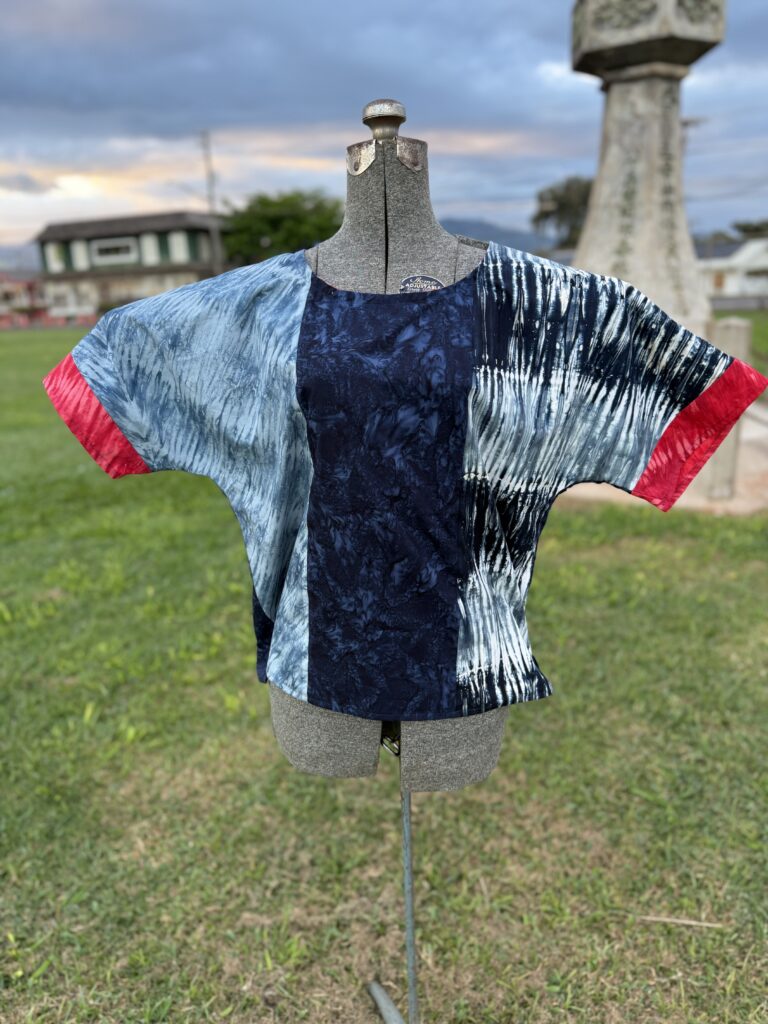
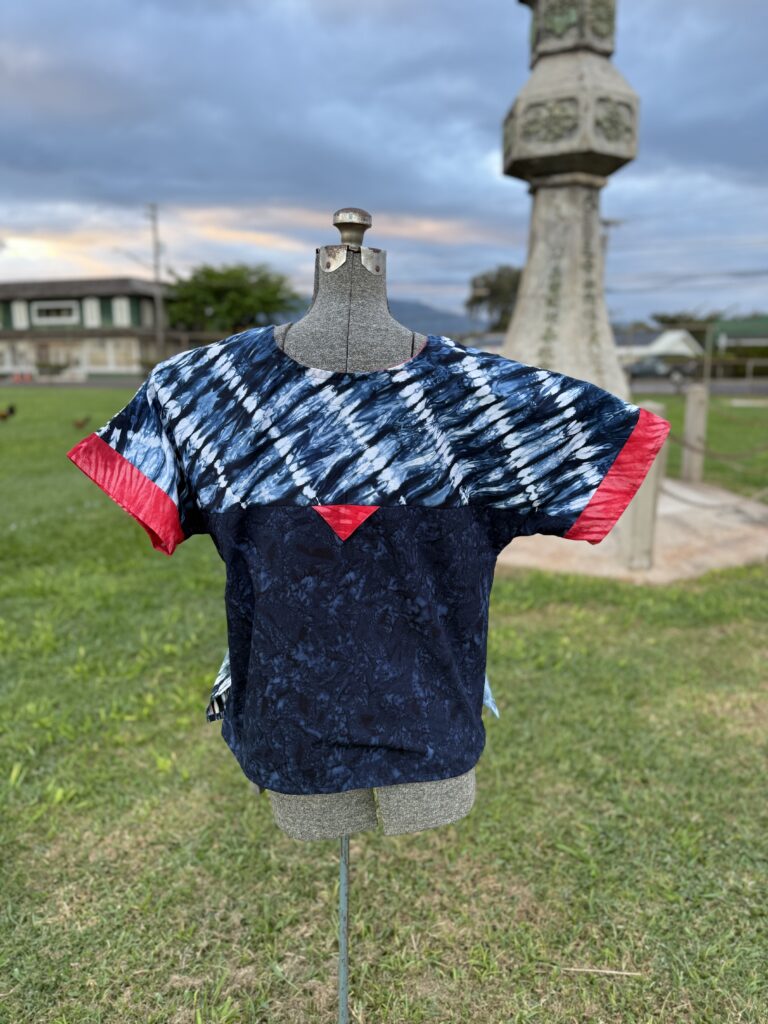
Toni Wass @ Tiger Textiles


You May Also Like

Team Up Locally & Grow Together
I Love Us Wall Hanging Boxed Kit by Sandy Gervais